Dormant Clauses, Active Consequences: Auditing the Rulebook Before It Is Used Against You
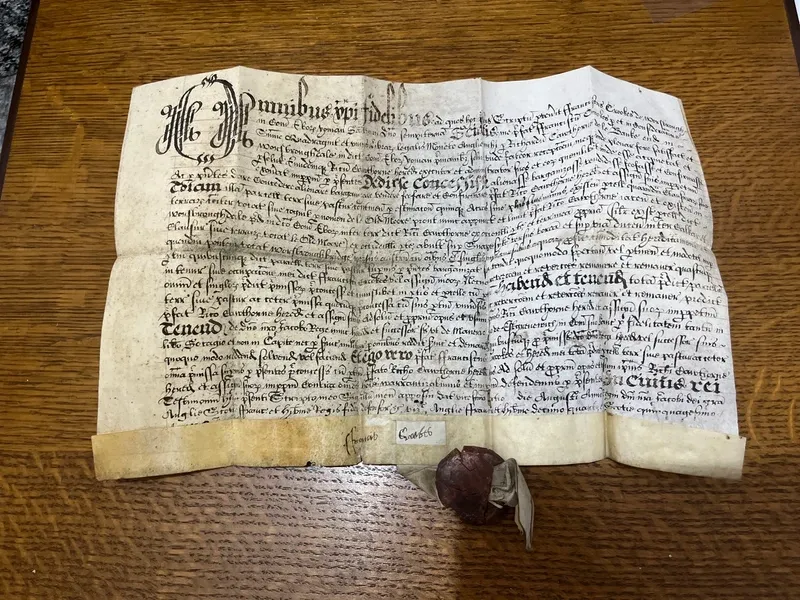
Photo: Unknown authorUnknown author, Public domain, via Wikimedia Commons
Every professional association in Britain is governed, in the final analysis, by a document that the overwhelming majority of its members have never read. The constitution — often accompanied by standing orders, bye-laws and a scattering of appendices adopted at some forgotten extraordinary meeting — is treated as boilerplate: filed at incorporation, consulted in crisis, and otherwise ignored.
This is a mistake, and increasingly an expensive one. When disputes arise over leadership, elections or the expulsion of members, it is precisely these dormant clauses that decide outcomes. Those who know the rulebook hold an advantage over those who assume it says what common sense suggests it should.
Why the Fine Print Matters More Than the Mission Statement
Association constitutions typically open with stirring language about purpose and fellowship. The consequential material, however, sits further down, in provisions governing notice periods, quorums, the validity of postal votes and the circumstances in which a chair may exercise a casting vote.
Consider a few recurring examples drawn from governance reviews across UK bodies:
- Quorum thresholds set at a fraction of the membership, allowing a small, motivated faction to pass resolutions at a poorly attended general meeting.
- Nomination windows of as little as fourteen days, announced only in a newsletter few members open, quietly excluding would-be challengers.
- Casting-vote provisions that hand an outgoing chair decisive power in a tied election or contested resolution.
- Removal clauses requiring a two-thirds majority at a quorate meeting — a bar so high that an underperforming office-holder is, in practice, unremovable.
- Interpretation clauses vesting final authority over the constitution's meaning in the very committee whose conduct is being challenged.
None of these provisions is necessarily improper. Many were drafted decades ago for a smaller, differently constituted organisation. The difficulty arises when they are invoked selectively — relied upon to block a challenge, then ignored when inconvenient.
The Anatomy of a Selective Reading
The pattern is familiar to anyone who has observed a contested AGM. A challenger's nomination is ruled out of time on a strict reading of the standing orders. A resolution of no confidence is declared inadmissible because the requisite notice was given in the wrong format. Meanwhile, the same body that enforced these technicalities approves its own procedural shortcuts — a co-option here, a deferred vote there — without objection.
This is not necessarily bad faith. More often it is the natural consequence of a rulebook that nobody has stress-tested: the provisions are enforced by whoever happens to be paying attention. A constitution unexamined is a constitution owned by whoever examines it.
A Practical Audit Checklist
Members and trustees would do well to conduct a periodic review of their governing documents — ideally well before any dispute is on the horizon. NAEO suggests the following framework:
1. Map the documents. Identify every instrument that purports to bind the association: the constitution or articles, standing orders, bye-laws, codes of practice and any resolutions of continuing effect. Conflicts between them are themselves a finding.
2. Trace the power over the rulebook. Who may propose amendments? What majority is required? Is member approval needed, or can the committee amend by resolution? The answer to this question answers most others.
3. Test the election machinery. Read the nomination, notice and voting provisions as a challenger would. Could a well-qualified candidate be excluded on a technicality? Could an incumbent be removed at all, in practice?
4. Examine the emergency powers. Look for clauses permitting the committee to act urgently, co-opt members or suspend rights. Note the safeguards — or their absence.
5. Check the interpretation and dispute clauses. Who decides what the constitution means? Is there an independent avenue of appeal, or does the association adjudicate its own conduct?
6. Assess compliance in fact. A well-drafted provision that has been ignored for a decade creates its own risks. Where practice has diverged from the documents, regularisation — not silence — is the answer.
From Audit to Amendment
An audit is only worthwhile if it leads to reform. Where defects are identified, associations should consider a consolidated revision put to members at a properly convened general meeting, with a plain-English summary circulated in advance. Charitable bodies should ensure any revision is consistent with their governing document's requirements and, where relevant, theCharity Commission's expectations.
The alternative — leaving the rulebook dormant until someone with a grievance or an ambition reads it closely — is a gamble few organisations can afford. Power in Britain's associations rarely announces itself. It sits quietly in clause 14(b), waiting for someone to find it.