Discipline or Denial? The Self-Regulation Question Britain's Professional Bodies Can No Longer Dodge
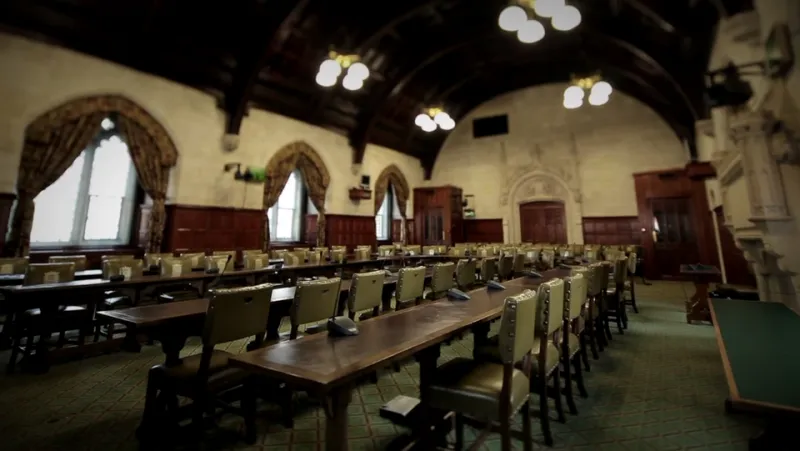
Photo: UK Parliament, CC BY 3.0, via Wikimedia Commons
There is a moment familiar to every conduct committee in the country. The evidence is in. The panel has deliberated. And now someone asks, in the hushed tone reserved for such occasions: do we really want this on the record?
It is in that moment that a professional body reveals what it actually is — a guardian of standards, or a guild protecting its own.
The Instinct to Protect
Let us be honest about the pressures. An association exists for its members. Subscription income depends on the rolls not thinning. A publicised disciplinary case embarrasses not only the individual but the institution, and by extension every member whose letters-after-the-name carry the association's implied warranty. The incentive structure quietly favours discretion: quiet resignations, mutually agreed retirements, matters 'resolved informally'.
None of this requires bad faith. It requires only ordinary human loyalty operating in a system with no counterweight.
The Cost of Quietness
The trouble is that the public has learned to read silence. When a body announces that a complaint was 'not upheld' without publishing the reasoning, or that a member has 'stepped down for personal reasons' mid-investigation, the inference drawn is rarely charitable — and usually correct to be so.
Recent conduct cases across several UK professions suggest the pattern holds. Complaints upheld but sanctions unpublicised. Panels chaired by the subject's former colleagues. Appeals heard, in effect, by the same institution that made the original decision. Each case individually defensible; the cumulative effect corrosive.
Self-regulation was never a right. It is a delegation of public trust, renewed case by case. The alternative — statutory regulation — is more expensive, slower, and blunter. But it is also waiting, patiently, for the sector to give ministers a reason.
What Reform Should Look Like
Reform need not be revolutionary. Four measures would transform confidence in the sector almost immediately.
First, publication of outcomes. Not the member's private details, but the finding, the sanction and the reasoning. Transparency is not cruelty; it is the price of delegated authority.
Second, independent chairs. Conduct panels should be led by someone with no prior service on the governing council, however distinguished.
Third, a published sanctioning framework, so that outcomes are predictable rather than negotiable. Discretion without criteria is simply inconsistency with better manners.
Fourth, a genuine right of appeal to an external reviewer — a retired judge, a fellow body's panel — even if exercised rarely. The point is not the appeals; it is the knowledge that they exist.
The Loyalty That Matters
The strongest argument for reform is not punitive. It is that associations which discipline honestly protect their honest members far better than those which do not. Every case quietly buried devalues the credential that thousands of scrupulous professionals have spent careers earning.
Loyalty to a member who has done wrong is not loyalty. It is deferred liability — and the bill, when it arrives, is addressed to everyone.