The Successor Test: Is Your Deputy Chair an Heir Apparent or an Ornament?
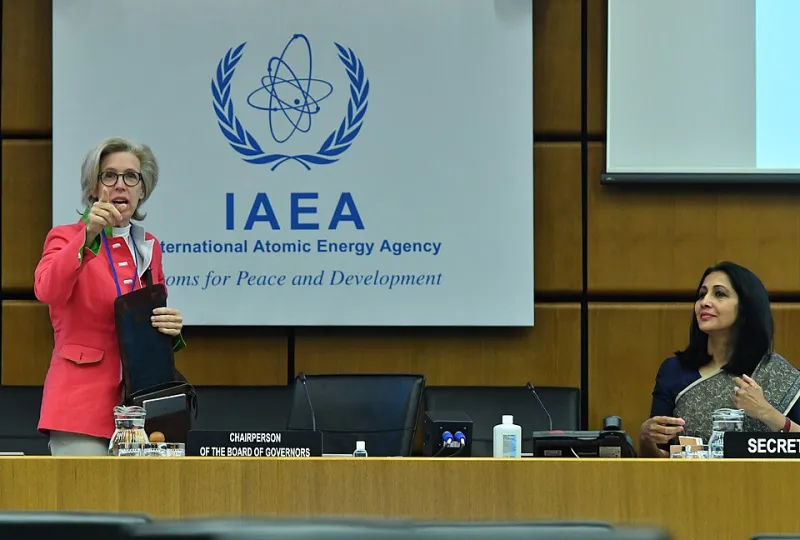
Photo: IAEA Imagebank, CC BY 2.0, via Wikimedia Commons
The Vacancy Nobody Plans For
Ask a chair of any mid-sized UK association what happens if they resign tomorrow, and the answer is often a pause followed by the phrase "we'd manage." It is a telling response. The Chartered Governance Institute has long cautioned that unplanned leadership transitions are among the most common triggers of organisational drift in the membership sector, yet the office designed to prevent precisely that — the deputy chair or vice-chair — remains one of the most casually filled posts in British associational life.
The pattern is familiar. A long-serving member is elevated to the deputy role as a courtesy, a consolation after a contested election, or a way of acknowledging seniority. The title is conferred; the preparation is not. When the chair's term ends, or illness intervenes, or a scandal forces an early exit, the association discovers that its second chair has attended every meeting and led none.
What a Real Deputyship Looks Like
There are exceptions, and they are instructive. Several professional bodies across the UK have formalised the deputy role into a deliberate pipeline. Under these arrangements, the vice-chair chairs a standing committee in their own right, deputises at branch and regional events, holds a defined portfolio — finance, governance reform, membership strategy — and receives a structured induction into the charity or company responsibilities that attach to office.
The contrast with the ornamental model is stark. In the pipeline model, the deputy has chaired meetings without the chair present. They have signed off papers. They have answered, at least once, an awkward question from the floor. When succession arrives, it is a handover rather than a vacuum.
Some associations have gone further, pairing the deputy with the chair in a two-term rhythm: first term as deputy, second as chair, with the outgoing chair remaining available — informally, and within carefully observed boundaries — for counsel. It is not a novel idea. It is simply how the armed services, the judiciary and most serious institutions have always handled command transitions. Associations, for reasons of politeness and habit, have been slower to adopt the discipline.
Why the Weak Deputy Is a Governance Risk
It is tempting to treat a passive vice-chair as a harmless inefficiency. The Charity Commission's guidance on board effectiveness suggests otherwise. Where no credible successor exists, chairs overstay — and an overstaying chair is the single most reliable predictor of stagnation in a membership body. Nominations dry up. Committees calcify around incumbency. Younger executives, reading the runes, take their energies elsewhere.
There is also the question of continuity that auditors and regulators increasingly probe. An association that cannot demonstrate a documented succession plan for its principal officer roles will find the topic raised, politely but pointedly, at governance reviews. Insurance underwriters, too, have begun to ask.
The Successor Test: Nine Questions
Members and trustees who wish to assess whether their second chair is an heir apparent or merely a titleholder might begin with the following:
- Can they chair a meeting alone? Not occasionally — routinely, with the chair's full confidence and absence.
- Do they own a portfolio? A deputy with no defined remit is a guest, not an officer.
- Have they represented the association externally — to regulators, government bodies, counterpart organisations — without supervision?
- Do they understand the finances? Could they read the management accounts and challenge the treasurer?
- Have they read the governing documents — constitution, royal charter, articles — and could they explain the amendment procedure?
- Is there a written handover plan, reviewed annually, naming them?
- Do the membership know who they are? A successor invisible to the wider body will struggle to command a mandate.
- Were they appointed for readiness, or for comfort? Be honest about which.
- Would the board elect them unopposed, or with relief?
An association that answers fewer than five in the affirmative should regard the deputyship as vacant in substance, whatever the letterhead says.
A Modest Reform
None of this requires constitutional upheaval. It requires the chair, the board and the nomination committee to treat the deputy role as what it should be: the most consequential appointment after the chairship itself. Define the portfolio. Set the development expectations. Review readiness annually, in a proper session, with minutes.
The alternative — the ornamental deputy, discovered to be ornamental at the worst possible moment — is not merely embarrassing. It is the quiet mechanism by which perfectly sound associations lose a decade.
NAEO will be publishing further guidance on officer succession planning for member organisations in the coming quarter.